Kismayo, Somalia | February 2026
A joint multi-sectoral rapid assessment conducted between February 9–10, 2026, paints a sobering picture of a deteriorating humanitarian crisis in the Kismayo District. Following failed Deyr seasons, the areas of Abdalle Birole, Bula Xaaji, and Janay Abdalle are facing a “near-total breakdown” of food and water security.
The Situation at a Glance
A joint multi-sectoral rapid assessment conducted between February 9–10, 2026, paints a sobering picture of a deteriorating humanitarian crisis in the Kismayo District. Following failed Deyr seasons, the areas of Abdalle Birole, Bula Xaaji, and Janay Abdalle are facing a “near-total breakdown” of food and water security.
The Situation at a Glance
The assessment, conducted by a joint team including SSO, NRC, MOHADMA, JUCRI, and ABC Kismayo, found that prolonged drought, livestock mortality, and conflict have pushed communities to the brink.
- Mass Displacement: In just four weeks, 2,404 households (approx. 14,424 individuals) were newly displaced across the three assessed locations.
- Livelihood Collapse: Predominantly pastoralists and small-scale farmers have seen their grazing lands disappear and livestock perish, leaving them with no income or food source.
- Zero Aid: At the time of the assessment, no humanitarian interventions were active across the three sites.
Critical Challenges
1. Water, Sanitation, and Hygiene (WASH)
Water scarcity has reached critical levels. In Abdalle Birole, families wait up to four hours for a share of a single shallow well. In Bula Xaaji, the only available water is too salty for human consumption, while residents in Janay Abdalle must trek to distant swamps. Across all sites, a total lack of latrines has led to widespread open defecation, spiking the risk of disease.
2. Food Security & Livelihoods
Displaced families are surviving on the generosity of host communities or the military. With no cash transfers or food vouchers available, many have resorted to extreme coping strategies, including asset depletion and enduring extortion from armed groups.
3. Shelter & Protection
Most displaced families lack basic materials to build shelters, leading to severe overcrowding. This poses significant safety risks, particularly for the 20+ individuals identified as living with disabilities and the many women and children who face harassment due to a lack of secure, private sanitation facilities.
Urgent Recommendations
The assessment team calls for an immediate, multi-sectoral scale-up of life-saving support:
- Multi-Purpose Cash Assistance (MPCA): To address immediate food insecurity.
- Emergency WASH: Urgent water trucking, well rehabilitation, and the construction of emergency latrines.
- Shelter & NFIs: Distribution of plastic sheeting, blankets, and household kits.
- Protection Services: Establishment of protection help desks and mobile health/nutrition services to support the most vulnerable.
“To avert further loss of life, a coordinated humanitarian response is required immediately. The window for intervention is closing as displacement continues to rise.”
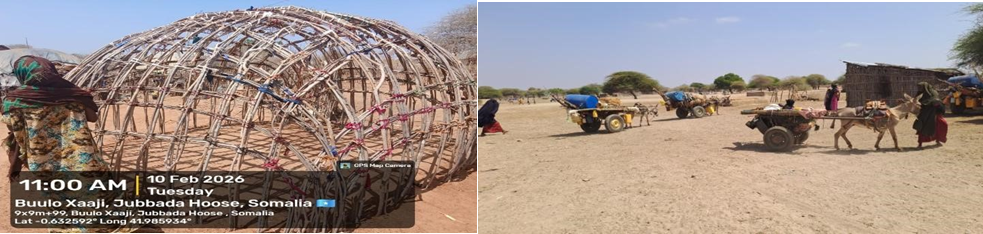
Figure 1 Reference pictures from Buulo Xaaji, Kismayo District, Lower Juba of Somalia
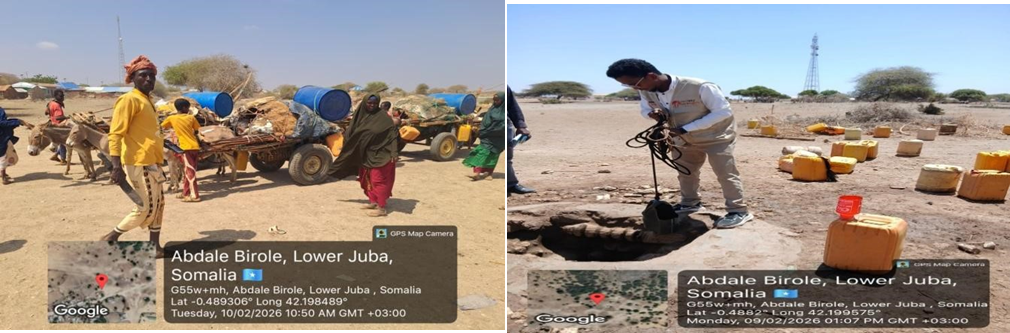
Reference pictures from Abdale Birole, Kismayo District, Lower Juba of Somalia
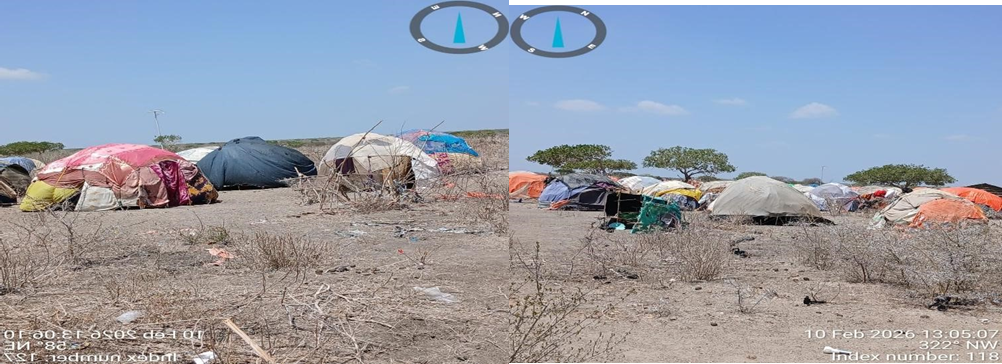
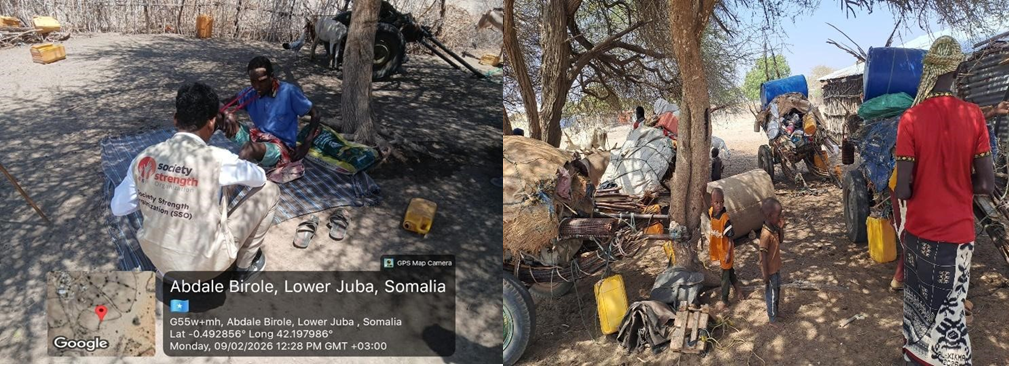
Reference pictures from Janaa Abdalle, Kismayo District, Lower Juba of Somalia